
New Wild Horses collection is here  /  Dollar Deco Days  /  Subscription extras  /  End of month clearance
0%

Decorative Sticker Books combine visual appeal, tactile design, and practical gifting value. Their popularity reaches stationery shops, bookstores, museums, and online marketplaces worldwide. Yet global sourcing requires more than attractive cover art. Buyers must assess suppliers, production standards, communication quality, and delivery reliability.

In practice, a strong sourcing process begins with clear product specifications. Define book size, page count, sticker materials, adhesive strength, finishes, packaging, and target quantity. Request physical samples before approving mass production. A sample can reveal uneven cutting, weak glue, faded colors, or pages that feel too thin. Compare several factories, not just the lowest quotation. Review their export experience, quality controls, certifications, and customer references. Ask for a detailed production timeline and a written quotation.

Regulatory checks also matter. Confirm that inks, adhesives, packaging, and product labeling meet the requirements of each destination market. Verify artwork ownership and obtain written permission for licensed characters or original designs. These steps protect both buyers and suppliers. They also reduce costly delays at customs or during retail inspections.

No sourcing plan is flawless. Details matter. Time zones can slow decisions, and supplier promises may sound stronger than their evidence. A practical buyer leaves room for revisions, inspections, damaged cartons, and seasonal shipping delays. Responsible sourcing should also consider recyclable packaging, fair working conditions, and transparent business records. With careful research and honest communication, buyers can develop Decorative Sticker Books that look beautiful, perform consistently, and earn customer trust across international markets.
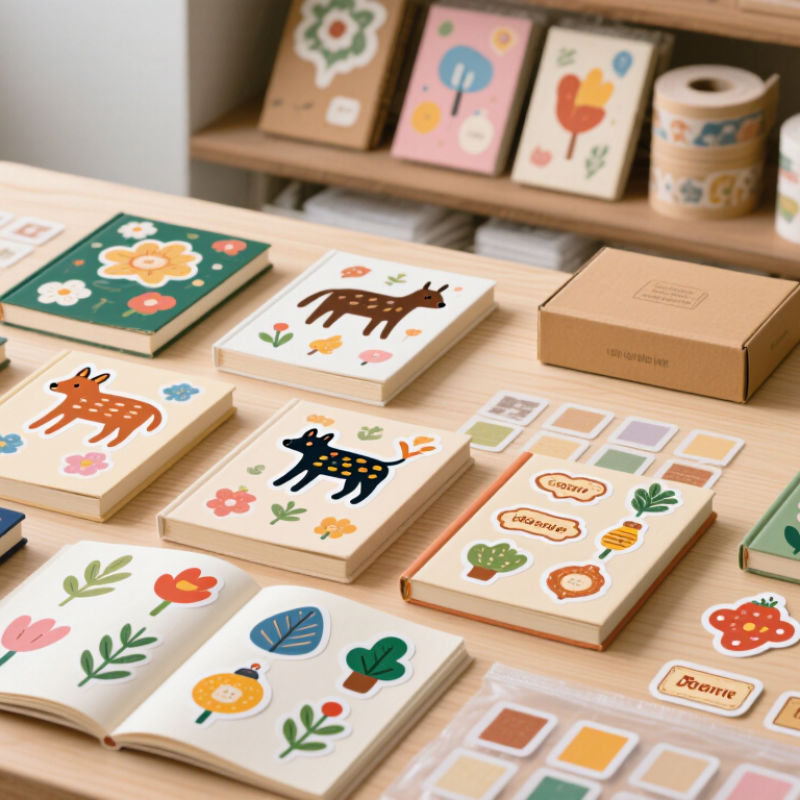
How to Source Decorative Sticker Books Worldwide?

Defining Your Decorative Sticker Book Sourcing Requirements

Sourcing decorative sticker books worldwide begins with a precise product brief. I learned this after reviewing samples that looked attractive but failed in daily use. Define the buyer before contacting suppliers. Is the book for children, planners, journaling, or gift purchases? Record the preferred theme, age range, page count, sticker size, and release season. Small details matter. A 10-millimeter sticker needs different cutting accuracy than a large label. Specify the book’s closed dimensions, paper weight, binding style, and page layout.

Material requirements should be measurable. State whether stickers need matte, glossy, transparent, removable, or writable surfaces. Ask for adhesive performance on paper, plastic, and coated pages. Include color expectations, print resolution, edge quality, and resistance to lifting. Request physical samples before approving production. A digital proof cannot reveal curling, odor, or weak glue. Our early requirement missed humidity testing. That omission caused pages to stick together in storage. The brief now includes temperature, humidity, and carton-drop checks.

Commercial details also shape the sourcing decision. Set a target quantity, acceptable defect rate, sample timeline, production lead time, and packaging format. Specify carton dimensions and shipping documents for each destination. Confirm that inks, papers, adhesives, and packaging meet applicable local requirements. Suppliers should provide test records, material declarations, and clear inspection procedures. Compare quotations by total delivered cost, not unit price alone. Leave room for revisions. A perfect brief rarely exists. Revisit it after sampling, because real handling often exposes assumptions that spreadsheets hide.

Identifying Reliable Global Suppliers and Manufacturing Regions

Reliable sourcing begins with matching a supplier’s production strengths to your sticker book design. China remains a major manufacturing region for offset printing, die-cutting, foil details, and large-volume orders. Vietnam can offer competitive assembly and paper-product production. India is worth exploring for handmade textures, recycled papers, and smaller creative batches. South Korea and Japan are known for precise printing and refined finishing, although their costs may be higher.

A dependable supplier should provide recent factory photos, material specifications, production samples, and clear quality records. Ask about paper thickness, adhesive performance, ink safety, color tolerance, and packaging conditions. Request a sample book, not only loose stickers. Check whether pages turn smoothly, stickers peel without tearing, and metallic details remain attached after handling. Small details matter.

Test before trusting.

Supplier audits can reveal useful facts, including subcontracting, weak storage, or inconsistent inspection procedures. I once underestimated humidity during shipping; several paper sheets curled after arrival. That mistake changed my purchasing process. Now I request moisture-control plans and carton testing before placing larger orders. Communication also deserves attention. Reliable factories explain delays, confirm revisions in writing, and identify production limits instead of promising everything. Verify compliance requirements in the destination market, including restrictions on inks, adhesives, packaging materials, and children’s products when applicable. A low quotation may hide costly rework.

How to Source Decorative Sticker Books Worldwide? - Identifying Reliable Global Suppliers and Manufacturing Regions

Manufacturing Region Typical Production Strengths Common Sticker Book Materials Indicative MOQ Range Typical Bulk Lead Time Quality and Compliance Checks Best Fit for Buyers
Mainland China Large printing and converting capacity; strong capabilities in die-cutting, foil stamping, lamination, specialty finishes, and custom packaging. Self-adhesive paper, coated paper, transparent film, washi-style paper, PET film, release liner, cardboard covers. Commonly 500–5,000 books per design; lower quantities may be possible with digital printing. Approximately 25–60 days after artwork approval; sampling usually adds 7–15 days. Check color consistency, adhesive aging, paper thickness, die-cut accuracy, barcode placement, and applicable destination-market chemical and toy-safety requirements. Large collections, complex finishing, competitive unit costs, and scalable production.
India Strong paper-converting, offset-printing, bookbinding, and manual assembly capabilities; suitable for paper-focused products. Uncoated and coated paper, recycled paper, kraft board, paper release liner, printed cardboard, adhesive paper. Often 1,000–5,000 books per design, depending on printing method and finishing requirements. Approximately 30–75 days, with timing influenced by paper availability and export documentation. Verify paper GSM, print registration, adhesive performance, humidity protection, carton strength, and social-compliance documentation. Paper-rich sticker books, recycled-paper concepts, educational products, and cost-sensitive programs.
Vietnam Growing printing and paper-product sector; suitable for straightforward formats and buyers seeking regional supply diversification. Coated paper, self-adhesive paper, cardboard, kraft paper, clear film, and standard packaging papers. Typically 1,000–5,000 books per design; custom low-volume programs require supplier confirmation. Approximately 30–70 days, depending on capacity, material sourcing, and port schedules. Review sample-to-bulk consistency, print color, humidity control, packaging protection, factory capacity, and export experience. Medium-volume orders, simpler designs, and supply-chain diversification in Southeast Asia.
South Korea High-quality commercial printing, refined color control, detailed finishing, and strong capability for premium stationery formats. Premium coated paper, transparent film, holographic or metallic film, specialty adhesive stock, rigid board. Commonly 1,000–3,000 books per design for custom premium products. Approximately 30–60 days after final approval. Inspect color tolerances, fine-line registration, coating uniformity, adhesive residue, packaging quality, and required product testing. Premium decorative collections, highly detailed artwork, and gift or lifestyle stationery.
Japan Precise printing, specialty papers, compact product formats, careful finishing, and strong quality-control culture. Washi-type paper, coated paper, transparent film, textured paper, foil-treated stock, and premium release liners. Often 1,000–3,000 books per design; small digital runs may be available at a higher unit cost. Approximately 35–75 days, depending on paper selection and production scheduling. Confirm paper origin, adhesive removability, edge precision, color standards, packaging specifications, and product labeling requirements. Premium, minimalist, specialty-paper, and design-led sticker books.
Taiwan Established printing, adhesive-label, converting, and specialty-material capabilities with good support for technical customization. Paper labels, clear films, synthetic paper, holographic films, removable adhesive stock, and specialty laminates. Commonly 1,000–5,000 books per design, subject to tooling and finishing requirements. Approximately 25–60 days after specification approval. Test adhesive tack and removability, film clarity, die-cut tolerances, lamination bonding, and material declarations. Specialty films, removable stickers, transparent designs, and technically demanding finishes.
Europe Strong compliance systems, premium paper printing, short regional transit times, and flexible support for localized or small-batch projects. FSC-certified paper options, recycled paper, coated paper, clear film, specialty board, and water-based or low-odor printing systems. Often 250–2,000 books per design, although pricing varies significantly by country and process. Approximately 15–45 days for standard production after artwork approval. Check FSC claim validity where applicable, EU chemical restrictions, packaging-waste obligations, paper traceability, and batch inspection records. Shorter replenishment cycles, sustainability-focused ranges, regional distribution, and smaller custom runs.
North America Commercial digital and offset printing, prototyping, short runs, and responsive fulfillment for local or regional markets. Self-adhesive paper, coated stock, recycled paper, clear film, synthetic paper, and rigid cover board. Commonly 100–2,000 books per design for digital or short-run production; offset quantities may be higher. Approximately 10–40 days, depending on format, materials, and finishing. Verify substrate specifications, adhesive safety documentation, print durability, packaging labeling, accessibility of test reports, and state or federal requirements where applicable. Market testing, rapid replenishment, limited editions, and smaller launch quantities.
Benchmark note: MOQ and lead-time figures are indicative industry ranges rather than fixed quotations. Actual terms depend on book size, page count, sticker count, printing process, die-cut tooling, adhesive type, packaging, order volume, seasonality, and destination-country requirements.
Supplier qualification priorities: Request a physical pre-production sample, confirm material and adhesive specifications, review recent inspection records, verify relevant environmental or chain-of-custody claims, approve a color standard, define acceptable defect limits, and use a written purchase specification before placing a bulk order.

Comparing Product Quality, Customization, and Minimum Order Terms

How to Source Decorative Sticker Books Worldwide?

Comparing Product Quality, Customization, and Minimum Order Terms

Sourcing decorative sticker books worldwide requires more than comparing unit prices. I request physical samples before approving any supplier. The paper should feel smooth, but not overly glossy. Sticker edges must release cleanly without tearing thin pages. I also check color accuracy under natural light. A bright sample can look dull after mass printing.

Customization affects both appearance and cost. Suppliers may offer custom covers, page layouts, sticker shapes, finishes, and packaging. I usually prepare a detailed specification sheet with dimensions, paper weight, adhesive type, and artwork files. Small details matter. For example, rounded corners can reduce sharp edges and improve handling. However, complex foil effects may increase production time. My first comparison ignored this delay, so the cheapest quote became less practical.

Minimum order terms need careful review. A low minimum order can suit a test launch, while larger quantities may reduce the unit cost. Ask whether the minimum applies to each design, color, or combined order. Also confirm sample charges, production timelines, replacement policies, and shipping terms in writing. Some suppliers quote a flexible minimum but change it after customization begins. That deserves caution. I prefer a small pilot order, followed by inspection of print alignment, adhesive strength, page count, and packaging damage. This approach costs more initially, but it exposes weaknesses before a larger commitment.

Evaluating Costs, Shipping Options, and International Trade Rules

Sourcing decorative sticker books worldwide requires more than comparing unit prices. A supplier quote may exclude packaging, sampling, inspection, duties, and destination taxes. I calculate the landed cost per book before approving an order. This figure includes production, cartons, freight, customs handling, and possible storage fees. A low factory price can become expensive after delivery.

Shipping should match the order’s urgency and volume. Express delivery suits samples and small cartons, but its cost rises quickly. Air freight offers predictable timing for medium shipments. Consolidated sea freight usually reduces cost for larger orders, although port handling and longer transit need careful planning. I request carton dimensions, gross weight, and a packing list before booking transport. These details often reveal errors in freight estimates. My early calculations once ignored inner packaging, so I now add a small contingency allowance.

International trade rules require careful document checks. The product’s HS classification should match its actual materials and use. Commercial invoices should show accurate values, quantities, origin, and delivery terms. Import duties, value-added taxes, and labeling requirements vary by destination. If the books may be used by children, additional product-safety rules can apply. Ink, adhesives, and paper should have supporting material information when authorities request it. Copyright concerns also matter; artwork must be properly authorized. Rules change. Verify them with the destination customs authority or a qualified trade adviser before shipment.

Managing Samples, Production, Inspection, and Reordering

Sourcing decorative sticker books worldwide requires more than comparing factory prices. A reliable process begins with controlled samples. Request the same paper stock, adhesive type, finish, page count, and packaging used for production. Ask suppliers to label each sample clearly. Keep one approved copy in your office. Test stickers on coated paper, cardboard, glass, and fabric-like surfaces. Check peeling, color transfer, odor, and edge cutting after 24 hours. My experience is simple: a beautiful sample can hide weak glue or uneven printing.

During production, confirm the approved sample before printing begins. Share a signed specification sheet with measurable tolerances. It should cover color, trim size, sheet alignment, binding, barcode placement, and carton quantity. Inspect an early production set, not only finished cartons. Use photos with a ruler beside the book. For larger orders, arrange an independent inspection before shipment. Random checks should include sealed cartons and loose books. Watch for crushed corners, missing sheets, crooked covers, and adhesive marks. Some defects appear only after stacking overnight.

Tips: Build reorder information while the first order is active. Record final material codes, approved artwork versions, carton dimensions, and actual packed quantities. Keep a small reserve of approved samples. Reordering from memory is risky. Set a reorder trigger based on sales speed and production lead time. Leave room for honest review. A supplier may improve one issue and introduce another. Compare every new batch with the retained sample, even when the order seems routine.

FAQS

Why should physical samples be requested before ordering decorative sticker books?

Samples reveal paper feel, color accuracy, sticker release, and print alignment. Check them under natural light. Screens can mislead.

What quality details deserve close inspection?

Inspect smooth paper, clean sticker edges, secure adhesive, accurate page counts, and undamaged packaging. Test several pages, not just one.

How can customization affect production costs and timing?

Custom covers, layouts, shapes, finishes, and packaging change the quotation. Foil effects may add production time. Small details matter.

What information should a specification sheet include?

Include dimensions, paper weight, adhesive type, artwork files, corner shape, finishes, and packaging requirements. Clear details prevent avoidable revisions.

How should minimum order terms be compared?

Ask whether the minimum applies to each design, color, or combined order. A small pilot order may reduce risk. The lowest minimum is not always practical.

Which extra costs belong in the landed cost?

Include production, cartons, sampling, inspection, freight, customs handling, duties, taxes, and storage. A cheap unit price can become expensive after delivery.

How should shipping methods match order size and urgency?

Express shipping suits samples and small cartons. Air freight offers predictable timing for medium shipments. Sea freight may cost less for larger orders.

What documents and rules should be checked before shipment?

Verify product classification, invoices, quantities, origin, delivery terms, labeling, and destination taxes. Child-use products may require extra safety information. Artwork should be properly authorized. Rules change.

Conclusion

Sourcing Decorative Sticker Books worldwide begins with clearly defining your product requirements, including theme, size, page structure, sticker materials, printing standards, packaging, target market, and expected order volume. Once these details are established, buyers can identify reliable suppliers and suitable manufacturing regions by reviewing production capabilities, communication, certifications, sample quality, and previous experience with similar products. Comparing suppliers should focus on material durability, color accuracy, customization options, minimum order quantities, lead times, and payment terms rather than price alone.

A complete sourcing plan should also evaluate unit costs, tooling or setup fees, packaging expenses, shipping methods, import duties, and relevant international trade requirements. Before placing a full order, request samples to confirm design and quality, then establish production specifications and inspection procedures. During manufacturing, monitor progress and resolve issues promptly. After delivery, assess customer feedback, inventory performance, and supplier reliability to make informed reordering decisions and build a stable long-term supply process.

Isla

Isla

Isla is a dedicated marketing professional with a strong understanding of product strategy, customer needs, and evolving market trends. As a key contributor to the company’s digital communications, Isla regularly writes and updates expert blog articles that provide practical insights, explain......