Choosing Gold Foil Planner Stickers for wholesale requires more than comparing prices. Buyers must evaluate finish quality, adhesive performance, packaging, and repeat-order reliability. According to Grand View Research’s 2024 stationery products market analysis, personalization and decorative paper goods remain important consumer interests. The report also highlights how product design supports differentiation in a crowded stationery market. For wholesalers, this means attractive foil details can help retailers create stronger shelf appeal.
The material matters. A smooth gold foil should catch light without looking overly harsh. On a weekly planner, tiny stars, dates, and habit icons must remain readable. Sticker sheets should also resist curling when stored in humid conditions. Avery Dennison’s technical guidance on pressure-sensitive adhesives shows that surface type, temperature, and storage conditions can affect adhesion. That detail is easy to overlook. It can also create avoidable returns.
Wholesale decisions should include sample testing, not only catalog inspection. Check foil coverage, die-cut accuracy, backing-paper release, and adhesive strength across several batches. Compare matte, glossy, and transparent substrates under normal retail lighting. Mordor Intelligence’s stationery market research points to continued demand for functional and visually distinctive products, but market data cannot predict every customer preference. That is where judgment remains necessary. A popular color may sell slowly in another region. A premium finish may also increase perceived value, yet reduce acceptable margin. The best choice balances design appeal, dependable production, and realistic resale pricing. Gold Foil Planner Stickers should look premium in photographs and perform consistently in customers’ hands. Perfect consistency is difficult. Careful testing makes the risk smaller.
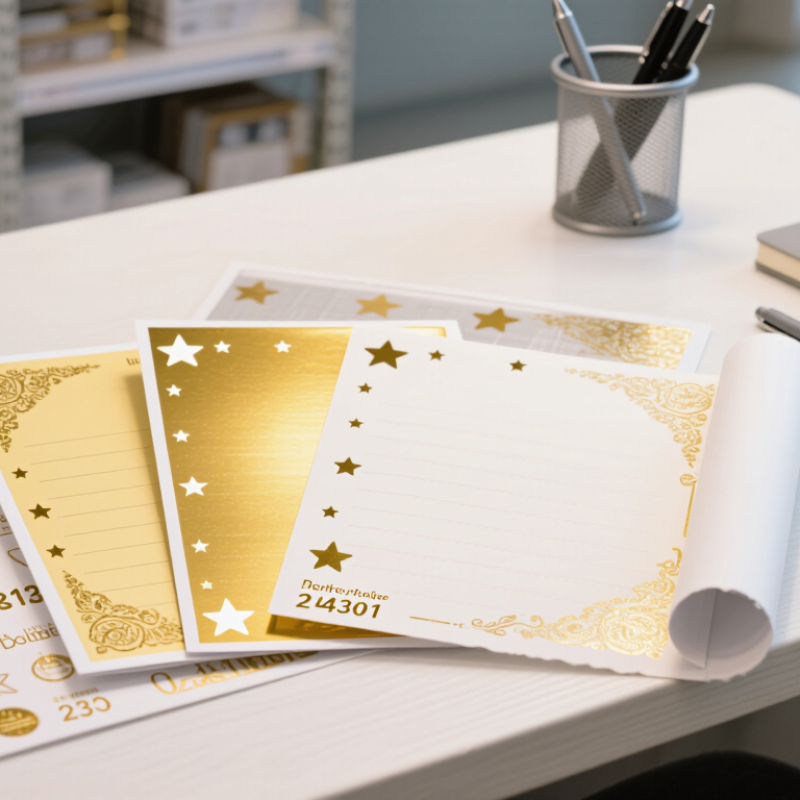
When choosing gold foil planner stickers for wholesale, define the sticker type before comparing prices. Functional stickers mark appointments, deadlines, habits, and expenses. Decorative stickers add borders, icons, quotes, or seasonal details. Mixed sheets combine both purposes and often suit wider customer groups. Individual kiss-cut stickers offer flexible placement, while full sheets support faster planning and simpler packing.
Gold foil is a finish, not a sticker type. Hot foil stamping creates sharp metallic details with strong visual contrast. It works well on smooth paper and clean line art. Matte paper reduces glare and feels softer in the hand. Glossy stock makes gold details look brighter, but fingerprints may appear more easily. Transparent stock creates a floating effect on planner pages. Embossed foil adds texture, although tiny letters can lose clarity. Test every finish under warm and cool lighting. A sample may look perfect on a screen, but disappointing in daylight.
Tips: Request production samples before placing a bulk order. Check foil coverage, corner lifting, adhesive strength, and cutting accuracy. Rub the foil lightly with a dry finger. It should not shed or dull quickly. Compare several batches, not one sheet. Wholesale decisions need evidence. Also check whether the backing paper peels cleanly and whether ink colors remain consistent. I once favored the brightest foil, but its glare reduced readability. That choice needed reconsideration. Sometimes a quieter finish sells better.
Gold Foil Planner Sticker Types and Finishes
The chart compares common gold foil sticker options using practical wholesale selection criteria. Hot foil stamping is well suited to precise lettering and detailed planner designs, while cold foil offers efficient metallic coverage on larger areas. Matte foil creates a softer appearance, and holographic foil adds changing reflective effects. Ratings use a five-point evaluation scale based on typical production characteristics rather than company or brand sales data.
For wholesale gold foil planner stickers, inspect the construction before judging the shine. A practical set usually combines a paper or PET face, metallic foil, release liner, and pressure-sensitive adhesive. Smithers’ 2024 label industry analysis projects pressure-sensitive label demand to grow by roughly 4% annually through 2028. That growth increases material choices, but also creates quality inconsistencies.
Test the adhesive on coated planner paper, kraft paper, and lightly textured stock. Apply each sticker with firm pressure, then check it after 24 hours. ASTM D3330 provides a recognized method for measuring peel adhesion, while ASTM D3654 evaluates holding power under load. These methods help suppliers compare batches, although planner pages are smaller and less uniform than industrial samples. Do not trust a strong first touch. It can fail later.
Durability needs physical testing. Rub the foil with a dry cotton cloth, bend the page repeatedly, and store samples in warm, humid conditions. Look for silver transfer, edge lifting, curling, and adhesive residue. A 2023 packaging materials report from Smithers identifies moisture resistance and surface compatibility as continuing label-performance concerns. The exact result depends on coating, storage, and paper fibers. This is where many wholesale evaluations become too optimistic.
Foil can look perfect.
Request production samples, not only digital proofs. Record peel behavior, foil abrasion, liner release, and aging results for every batch. A slightly less reflective finish may perform better in daily use. That trade-off deserves honest review.
| Sticker Material | Gold Foil Appearance | Typical Thickness | Adhesive Type | Adhesive Performance | Durability Profile | Moisture Resistance | Best Wholesale Applications | Recommended Quality Checks |
|---|---|---|---|---|---|---|---|---|
| Uncoated Paper | Warm, soft metallic effect with a natural paper texture | Approximately 70–100 microns | Permanent pressure-sensitive adhesive | Good on clean, dry paper | Suitable for indoor planner use; may tear or scuff with frequent handling | Low | Budget planner kits, notebooks, calendars, and short-term organization projects | Check for smooth die-cut edges, consistent foil coverage, and clean release from the backing sheet |
| Coated Paper | Sharper gold reflection and smoother printed surface | Approximately 80–120 microns | Permanent or removable pressure-sensitive adhesive | Good to very good | Better resistance to surface abrasion than uncoated paper; still intended mainly for indoor use | Low to moderate | Premium planner sheets, habit trackers, productivity journals, and gift stationery | Test adhesion after 24 hours and inspect whether the coating cracks during bending |
| White Vinyl | Bright, high-contrast metallic finish with a smooth surface | Approximately 90–130 microns | Permanent pressure-sensitive adhesive | Very good on smooth surfaces | Flexible and tear-resistant; generally performs well under repeated handling | Good | Reusable planners, water-bottle decoration, storage labels, and frequently handled accessories | Check for edge lifting after rubbing, clean removal from the liner, and resistance to light splashes |
| Clear Vinyl | Transparent background with a floating gold-foil effect | Approximately 80–120 microns | Permanent pressure-sensitive adhesive | Very good on smooth, non-porous surfaces | Flexible and visually durable; scratches may be more noticeable on transparent areas | Good | Minimalist planners, dashboard inserts, glass jars, and decorative overlays | Evaluate transparency, air bubbles, foil alignment, and visibility on both light and dark backgrounds |
| Matte Vinyl | Soft metallic appearance with reduced glare and a premium tactile feel | Approximately 90–140 microns | Permanent pressure-sensitive adhesive | Very good | Good resistance to handling and minor surface scuffs; matte coating can show heavy rubbing | Good | Premium planner collections, functional labels, wellness journals, and lifestyle stationery | Check color consistency, surface smoothness, corner adhesion, and resistance to fingernail scratching |
| Removable Paper | Clean gold effect with a lightweight, writable paper feel | Approximately 60–90 microns | Removable pressure-sensitive adhesive | Moderate | Designed for repositioning rather than long-term wear; may lose adhesion after repeated moves | Low | Temporary planning, appointment labels, study schedules, and trial sticker packs | Test repositioning after 1 hour, 24 hours, and 7 days without paper tearing or adhesive residue |
| Glossy Synthetic Film | Strong reflective finish with crisp edges and saturated color contrast | Approximately 80–130 microns | Permanent pressure-sensitive adhesive | Very good on smooth surfaces | Resists tearing and handles frequent contact; glossy surfaces can reveal fingerprints | Good | High-volume planner assortments, decorative sticker books, and durable labeling products | Inspect gloss uniformity, foil transfer, die-cut precision, and adhesive performance after flexing |
| Recycled Paper | Subtle metallic finish with a textured, eco-oriented appearance | Approximately 80–120 microns | Permanent pressure-sensitive adhesive | Good on paper surfaces | Performance varies with fiber texture; may have a more natural but less uniform surface | Low | Eco-conscious stationery ranges, handmade-style planners, and sustainable gift sets | Check fiber shedding, surface consistency, foil adhesion, and batch-to-batch color variation |
Wholesale buyers should match sticker designs with the routines of their customers. Minimal icons suit office planners and habit trackers. Florals, stars, and seasonal motifs attract lifestyle-focused users. Gold foil adds a premium touch, but excessive shine can reduce readability. Keep the message clear.
Size also affects daily use. Small icons fit narrow weekly columns and compact journals.
Medium stickers work well for appointments, reminders, and meal planning. Larger sheets support decorative layouts and monthly dashboards.
Measure common planner spaces before placing a bulk order. A few millimeters matter.
Format should follow buying habits. Individual sheets offer variety and simple retail display. Sticker books create a stronger gift impression and protect loose pieces.
Functional sets may include labels, checklists, dates, and blank accents. Customers often prefer coordinated designs instead of random assortments.
I once chose a beautiful set with oversized quotes, but users found it difficult to place. That mistake changed my sampling process.
Request physical samples before confirming wholesale production. Check foil alignment, adhesive strength, cutting accuracy, and paper thickness.
Rub a sticker lightly across a planner page. The foil should remain smooth, without lifting at the edges. Test both matte and glossy surfaces.
Some finishes look excellent under showroom lights but feel too reflective at home. Gather feedback from different customer groups, then adjust the mix rather than trusting one opinion. Small revisions can prevent large quantities of unwanted stock.
When choosing gold foil planner stickers for wholesale, compare the landed cost, not only the unit price. A 2024 PPAI Research industry report valued promotional product sales at about $26.1 billion in 2023. That scale shows strong demand, but it also exposes a problem: low quotes may exclude foil setup, proofing, packaging, or freight. Request a tiered quotation for 100, 500, and 1,000 sheets. Record the foil coverage, sticker size, adhesive type, and packing method beside each price. A seemingly cheaper order can become expensive after revisions and shipping.
Minimum order quantities deserve equal attention. Small batches reduce storage risk, while larger orders usually lower the price per sheet. Ask whether the supplier allows mixed designs within one MOQ. Some factories count each artwork as a separate order, which can damage a seasonal collection’s margins. Request a physical sample, especially for fine gold lines and dark paper. Foil alignment can drift slightly. It happens.
Custom options should be evaluated against actual customer use. A 2023 report from Grand View Research identified personalization as a key growth direction across digital printing applications, but customization still increases approval time and production complexity. Confirm die-cut shapes, transparent backing, metallic color, removable adhesive, and waterproof coating before payment. I would also test stickers in a real planner for two weeks. Gold foil may look premium on a sample, yet lift at the corners during daily handling. That small test can reveal more than a polished sales sheet.
How to Choose Gold Foil Planner Stickers for Wholesale
A dependable supplier should provide a registered business identity, clear contact details, and consistent product information. Ask about foil material, adhesive type, paper thickness, and production capacity. Request recent inspection records when available. Do not rely on polished photos alone. A short video of current production can reveal cutting accuracy and surface defects.
Order samples before discussing large quantities. Check whether the gold foil stays bright after rubbing, folding, and light handling. Test the adhesive on coated and uncoated planner paper. Look for lifting corners, uneven edges, glue residue, and weak backing sheets. Keep samples for comparison. One sample may not represent every batch. That is an uncomfortable but important limitation.
Packaging deserves practical attention. Stickers should arrive flat, dry, and separated from moisture. Protective sleeves, rigid cartons, and batch labels can reduce damage during transport. Ask how cartons are sealed and whether the packing list matches the shipment. Quality standards should include color tolerance, foil coverage, die-cut precision, adhesive performance, and defect limits. Put these details in writing. Vague promises create expensive disagreements. I would also keep a simple inspection record with photos, sample codes, and delivery dates. It may feel excessive, but memory is unreliable when several suppliers are involved. Request corrective action when results fall short, and review the supplier again after the next batch.
Most sets combine a paper or PET face, metallic foil, release liner, and pressure-sensitive adhesive. Material balance matters more than shine alone.
Apply samples to coated, kraft, and lightly textured planner paper. Press firmly, then check adhesion after 24 hours. Strong first contact can mislead.
Look for lifted edges, curling, sliding, or sticky residue. Check each surface separately because paper coatings behave differently. Results may vary.
Rub the foil with a dry cotton cloth. Bend the planner page repeatedly. Watch for silver transfer, scratches, or edge lifting.
Yes. Store samples in warm, humid conditions before inspection. Moisture can reveal curling, weak adhesion, and surface incompatibility.
Small icons fit narrow weekly columns and compact journals. Medium stickers suit reminders and appointments. Larger sheets support dashboards and decorative layouts.
Individual sheets offer variety and easy display. Sticker books feel more gift-ready and protect loose pieces. Functional sets can include labels, dates, and checklists.
Digital proofs cannot show real foil texture or adhesive behavior. Inspect cutting accuracy, paper thickness, foil alignment, and liner release. Showroom shine can deceive.
Gather feedback from office planners, journal users, and decorative customers. Adjust the design mix after testing. I once favored oversized quotes, but placement became difficult. That mistake still matters.
Choosing Gold Foil Planner Stickers for wholesale requires careful evaluation of style, quality, and business value. Start by identifying suitable foil types and finishes, such as glossy, matte, holographic, or textured effects, and consider how each option fits different planner styles. Review the sticker material, printing clarity, adhesive strength, and resistance to peeling, fading, moisture, and regular handling. Designs should also match customer preferences, with practical attention to themes, colors, sizes, sheet layouts, and individual formats.
Wholesale buyers should compare unit pricing, minimum order quantities, production times, and available customization options before making a decision. A reliable supplier should provide samples so you can inspect foil consistency, cutting accuracy, color quality, and adhesion. It is also important to review packaging methods and quality-control standards to reduce damage during storage and shipping. By balancing visual appeal, dependable performance, flexible ordering, and consistent production, you can select Gold Foil Planner Stickers that offer strong value and meet the expectations of your target customers.