
New Wild Horses collection is here  /  Dollar Deco Days  /  Subscription extras  /  End of month clearance
0%

Choosing the right PET Decorative Tape supplier in 2026 requires more than comparing glossy finishes or low quoted prices. Global buyers need dependable materials, stable production, clear documentation, and communication that remains practical across time zones. This guide introduces suppliers that deserve closer evaluation for decorative packaging, labeling, stationery, gift wrapping, and creative retail applications.

The review considers PET film clarity, adhesive consistency, coating quality, print registration, and resistance to peeling. Sample rolls can reveal defects that photographs hide. They also show how the tape behaves on glass, paperboard, plastic, and textured surfaces. Reliable suppliers should explain thickness options, roll dimensions, core sizes, minimum order quantities, and expected lead times. They should also provide relevant technical data and quality-control information when requested.

Price still matters. It should not lead the decision alone. A cheaper roll may create waste through uneven edges, weak adhesion, or color differences between batches. That risk is easy to underestimate. Supplier evaluations should include production experience, export capability, response speed, and the traceability of raw materials. Buyers should verify claims through samples, written specifications, and independent testing when the application requires it. No supplier is perfect, and this selection may change as capacity, technology, and service performance develop. The most suitable partner is not always the largest factory. It is the one that consistently matches your required finish, volume, compliance expectations, and delivery schedule.
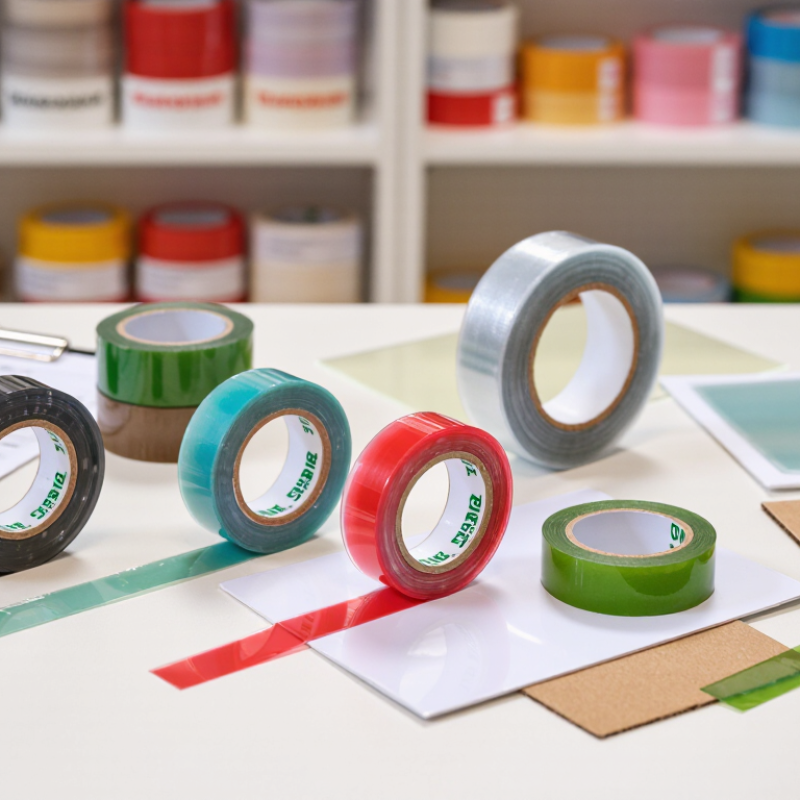
2026 Best PET Decorative Tape Suppliers for Global Buyers

PET Decorative Tape: Materials, Features, and Common Applications

PET decorative tape typically combines a clear or colored polyester film with acrylic adhesive. The film offers dimensional stability, smooth printing, and resistance to water and many household chemicals. Common gauges range from 12 to 50 microns. Thinner grades feel flexible. They can also wrinkle more easily. Grand View Research’s 2024 PET Films Market Report identifies packaging and labeling as major demand areas.

In retail, PET tape decorates jars, gift boxes, notebooks, cable organizers, and display panels. Transparent grades preserve substrate visibility. Matte grades reduce glare under store lighting. Metallic finishes create sharper shelf contrast. For curved containers, test adhesion after condensation and repeated handling. That test matters. Smithers’ polyester-film outlook through 2028 connects continuing demand with packaging, labels, and industrial graphics.

Global buyers should request peel adhesion, shear, aging, and migration documentation. ASTM D3330 is commonly used for pressure-sensitive adhesive peel testing. Suppliers should state film thickness, adhesive chemistry, liner type, roll length, and storage limits. PlasticsEurope reported 413.8 million tonnes of global plastics production in 2023. That figure reinforces the need for material efficiency. Recycled PET content can reduce virgin resin use, but clarity and adhesive performance may change. A neat sample can mislead. I would approve production only after humidity, abrasion, and removal trials.

How to Evaluate PET Decorative Tape Suppliers

When evaluating PET decorative tape suppliers, begin with the application, not the catalog. Tape for curved furniture edges needs different adhesion than tape for indoor craft panels. Request samples with stated PET thickness, adhesive type, liner material, and finish. Check each roll by hand. Look for edge lifting, uneven gloss, bubbles, and adhesive transfer after removal. Small details matter. Ask how the supplier controls coating weight and color consistency across production batches. Vague answers deserve caution.

A reliable supplier should provide test data, safety documentation, and traceable batch records. Review peel adhesion, shear resistance, aging performance, and temperature limits under conditions close to your factory. If your market spans several climates, test humidity and heat separately. Do not trust one attractive sample. Order samples from different lots when possible. Compare them after storage. A low price can hide unstable coating, excessive waste, or long replacement cycles. Lead time, minimum order quantity, packaging strength, and export experience also affect total cost.

Visit the facility, or request a live video inspection. Observe clean storage, calibrated equipment, and clear inspection procedures. Ask what happens when a batch fails. Honest answers reveal more than polished brochures. I would also verify production capacity against your forecast, because impressive figures may cover every product line, not yours. No checklist is flawless. Early assumptions can still distort a decision. Keep a written scorecard, record weaknesses, and revisit them before signing an agreement. A supplier accepting reasonable testing is usually easier to manage.

Key Supplier Regions and Manufacturing Capabilities in 2026

2026 Best PET Decorative Tape Suppliers for Global Buyers

In 2026, PET decorative tape sourcing is becoming more regional and capability-driven. East Asia remains strong in precision coating, multilayer printing, and high-volume slitting. Southeast Asia offers competitive labor costs, expanding export infrastructure, and flexible production for medium orders. European suppliers often focus on premium finishes, low-emission adhesives, and strict process documentation. North American factories can support shorter regional lead times and customized packaging programs.

Manufacturing capability matters more than a polished catalog. Reliable suppliers should control PET film thickness, adhesive weight, color consistency, and release performance in-house or through qualified partners. Gravure and digital printing support detailed patterns, while automated slitting improves edge quality. Some factories also provide flame treatment, matte varnish, metallic effects, and custom cores. Small details matter here.

A practical audit should examine coating rooms, humidity control, batch records, and carton protection. Request samples from different production lots, not only one attractive sample. Check peel strength after heat, storage, and repeated handling. A certificate alone is not proof. I would also compare actual lead times with quoted lead times, because optimistic schedules are common. Suppliers that share test data, corrective-action records, and clear tolerance limits usually deserve closer consideration. Still, no factory is perfect, and even experienced buyers should leave room for unexpected color shifts or adhesive variation.

Quality Standards, Customization, and Packaging Options

2026 Best PET Decorative Tape Suppliers for Global Buyers

Reliable PET decorative tape starts with measurable quality standards. Ask suppliers for film thickness, adhesive type, peel strength, tensile strength, and heat resistance. A sample roll should unwind smoothly, without edge lifting or cloudy printing. Request test reports for color stability, adhesion, and dimensional consistency. These details matter when tape is applied to gift boxes, glass jars, stationery, or electronic accessories.

Customization should include width, length, surface finish, color matching, and printed patterns. Good suppliers confirm artwork dimensions before production. They should also explain minimum order quantities and sample approval steps. Packaging needs equal attention. Individual rolls may require moisture-resistant bags, protective separators, and strong export cartons. Clear labels should show batch numbers, roll sizes, quantities, and handling information. In practice, small labeling errors can delay warehouse receiving. That is easy to underestimate.

Tips: Test samples on the actual packaging material. Check adhesion after 24 hours, not only immediately. Ask for carton drop-test details and pallet photographs. Confirm whether recycled PET content changes clarity or printing results. No supplier gets every detail right. I have seen attractive samples fail during humid storage, so climate testing remains worthwhile. A written specification sheet prevents assumptions, although buyers sometimes leave it too late.

How Global Buyers Can Compare Prices, MOQs, and Lead Times

2026 Best PET Decorative Tape Suppliers for Global Buyers

For global buyers, PET decorative tape quotes rarely tell the whole story. A low unit price may hide higher packaging, tooling, or freight costs. Compare prices by roll, square meter, and finished carton. Check adhesive type, film thickness, print coverage, and core size. These details affect actual value. Ask for a complete commercial quote. Request sample rolls before approving large volumes. Small tests reveal curling, weak adhesion, color variation, and edge damage.

MOQ also needs careful review. Some suppliers set separate minimums for each color, width, or design. Others accept mixed cartons, but charge more for smaller batches. Compare the price at three volume levels. This shows whether discounts are real. A flexible MOQ may help new buyers reduce inventory risk. However, very small orders can increase setup costs. It is not always cheaper. My earlier purchasing comparisons focused too heavily on unit price. That mistake made the final cost less predictable.

Lead time should be divided into artwork approval, sampling, production, inspection, and dispatch. Ask for working days, not vague promises. Confirm whether the schedule starts after payment or final approval. A realistic supplier should explain delays caused by custom printing or material shortages. Request a written production timeline and shipment-ready date. Include buffer time for port congestion and quality corrections. Some buyers skip this step. They often face urgent air freight later. Check recent production records, inspection procedures, and communication speed before placing a deposit. Reliable performance matters more than an attractive first quotation.

FAQS

What is PET decorative tape made from?

It usually combines polyester film with acrylic adhesive. The film may be clear, colored, matte, or metallic. Thickness commonly ranges from 12 to 50 microns.

Where is PET decorative tape commonly used?

It decorates jars, gift boxes, notebooks, cable organizers, furniture edges, and display panels. Transparent tape keeps the surface visible. Matte tape reduces glare.

How should I choose tape thickness?

Thinner tape feels flexible but may wrinkle around curves. Thicker tape can feel more stable during handling. Test the actual surface before approval.

What tests should buyers request from suppliers?

Request peel adhesion, shear resistance, aging, tensile strength, heat resistance, and migration information. Test samples after humidity, abrasion, and removal. One test is not enough.

How can I evaluate a supplier’s sample?

Check the roll by hand for bubbles, edge lifting, uneven gloss, and adhesive transfer. Apply it to the real packaging material. Inspect it again after 24 hours.

Does recycled PET content affect performance?

It may reduce virgin resin use, but clarity, printing, and adhesive performance can change. Ask for specific content information. A neat sample can mislead.

What customization options are usually available?

Buyers can often specify width, roll length, color, surface finish, and printed patterns. Confirm artwork dimensions before production. Sample approval should be documented.

What packaging details should global buyers confirm?

Ask about moisture-resistant bags, separators, strong export cartons, and pallet protection. Labels should show batch numbers, roll sizes, quantities, and handling details. Small errors can delay receiving.

How can climate affect PET decorative tape?

Humidity and heat may weaken adhesion or increase edge lifting. Test each climate separately when markets differ. Condensation matters on curved containers. I would not rely on one attractive sample.

Conclusion

This guide to PET Decorative Tape helps global buyers understand the material, performance, and practical uses of this versatile product. It explains how PET film provides dimensional stability, smooth appearance, reliable adhesion, and resistance to moisture, abrasion, and moderate temperature changes. Common applications include packaging decoration, product labeling, gift wrapping, stationery, crafts, and visual enhancement for consumer goods.

The article also presents a practical framework for evaluating suppliers in 2026, including manufacturing experience, production capacity, quality control, export capability, and communication efficiency. It reviews major sourcing regions, customization options such as colors, patterns, finishes, widths, lengths, and adhesive types, as well as packaging solutions for safe international shipping. Finally, buyers will learn how to compare quotations by considering product specifications, minimum order quantities, tooling or sampling costs, lead times, payment terms, and overall supply reliability rather than focusing only on the lowest unit price.

Amelia

Amelia

Amelia is a highly skilled marketing professional with a deep understanding of the company’s products, customers, and industry landscape. With a strong background in content strategy, market research, and digital communication, she transforms complex product information into clear, practical, and......